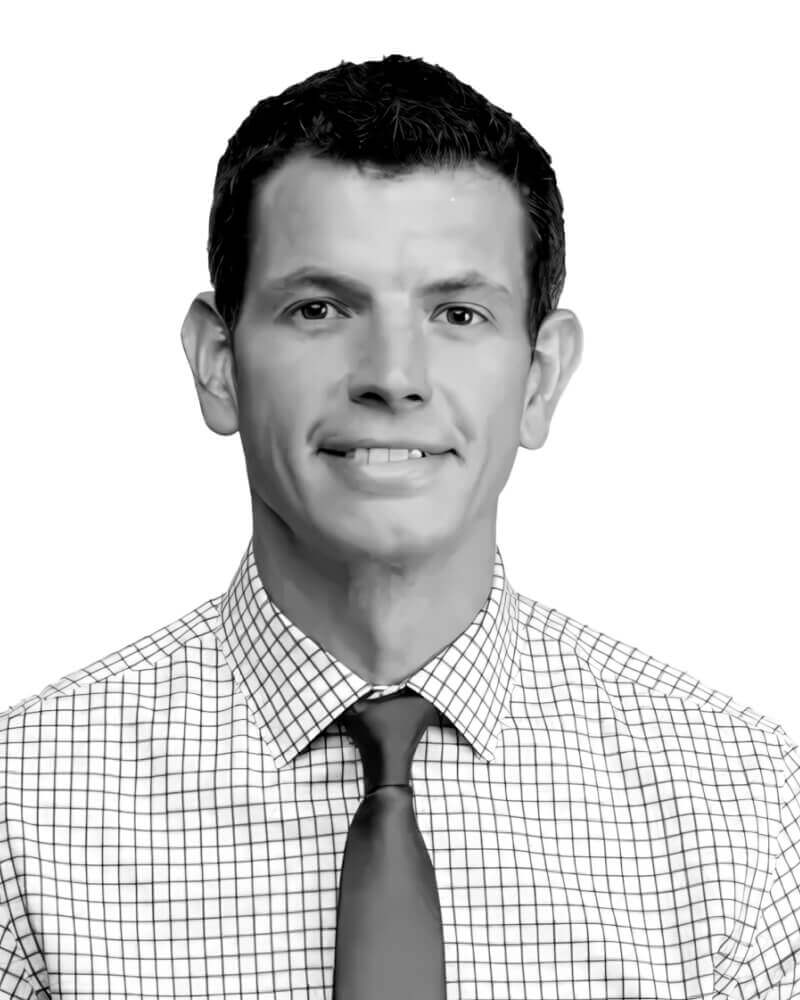
“It’s about seeking out selective struggles, some type of challenge, and then coming out stronger on the other side.”
Twelve Years. Two Wars.
Adam Popp grew up mission-driven. He spent twelve years as a U.S. Air Force Explosive Ordnance Disposal team leader, deploying to both Iraq and Afghanistan, approaching the devices designed to end lives and making them safe. It required technical mastery, composure under pressure, and a particular kind of courage that never drew attention to itself.
In 2007, while working to disarm a roadside bomb in Afghanistan, Adam was injured by a secondary IED. The result was the amputation of his right leg above the knee.
“I thought my life might be over,” he has said. “And that’s not an exaggeration.”
What he chose to do with the years that followed is the rest of the story.
Walter Reed, and the Pledge He Made to Himself
Adam spent eighteen months recovering at Walter Reed Medical Center. In that time, he saw something that changed everything i.e., the crucial role that peer mentors and elite adaptive athletes played in helping fellow patients rise to a higher level of functioning after trauma.
“When you’re in your hospital bed or training for your first 5k, you really need elite para-athletes to show you what’s possible,” he said.
By the end of his stay, Adam had made a pledge. He would use everything he had lived through his experience, his understanding, his compassion to help others overcome their own physical and emotional challenges and reach their full potential.
In the years immediately following his discharge, Adam maintained what he has described as a “couch potato” lifestyle, stepping back from the physical life he had always known. That changed in 2015, when he received his first running prosthetic.
The First Run. Then the Records.
In December 2016, eight years after losing his leg and just a year and a half after his very first run as an amputee, Adam became the first above-knee amputee in history to complete a 100-mile ultramarathon within the 30-hour cutoff.
He did not stop there.
- Ten Guinness World Records, earned through years of pushing the limits of endurance.
- 2024 Boston Marathon Para Elite Champion, followed just six days later by a T63 world-best time of 3:08:52 at the London Marathon.
- Twelve paratriathlon podium finishes, including victory at the 2018 ITU Paratriathlon World Cup and a fifth-place finish at the 2019 World Championship.
- Six completed 100-mile ultramarathons, proving that the first historic finish was far from a one-time achievement.
- And in 2019, he set the overall course record at the Colorado Kickers for Kids Trail Marathon, crossing the finish line ahead of able-bodied competitors.
The records are remarkable. But they aren’t the story. The real story is about choosing to keep moving forward, one step, one mile, and one finish line at a time.
The Career Built From Everything He Survived
Named a 2016 Tillman Scholar, Adam completed a Master’s in Rehabilitation and Clinical Counseling from George Washington University and a second Master’s in Sport and Performance Psychology from the University of Denver, combining his lived experience with formal expertise to build a counseling practice dedicated to helping others maximize their potential through movement and mentorship.
He has served on the Board of Directors of the EOD Warrior Foundation for thirteen years, on the VA Veterans’ Advisory Committee on Rehabilitation for three years, and as a certified peer-mentor trainer through the Amputee Coalition of America. He works with organizations including Dare2Tri, Achilles International, and Team RWB, supporting adaptive athletes, veterans in transition, and anyone navigating life after trauma.
He was also featured in the documentary Alive, which follows veterans who turned to athletics to heal physically and emotionally from their combat wounds.
Every record he sets. Every race he finishes. Every client he sits with. All of it is in service of the pledge he made to himself at Walter Reed.
What Adam’s Story Leaves Us With
Adam Popp’s story teaches us something that no record or finish time can fully capture, that the hardest thing about recovering from the worst moment of your life is not the physical work. It is deciding, in the face of everything, that you are going to keep going.
Adam made that decision. And then he made it again every single day, on the track, in the counseling room, and in every conversation with someone sitting in the same hospital bed he once sat in.
He has lived everything he teaches. That is exactly why it works.