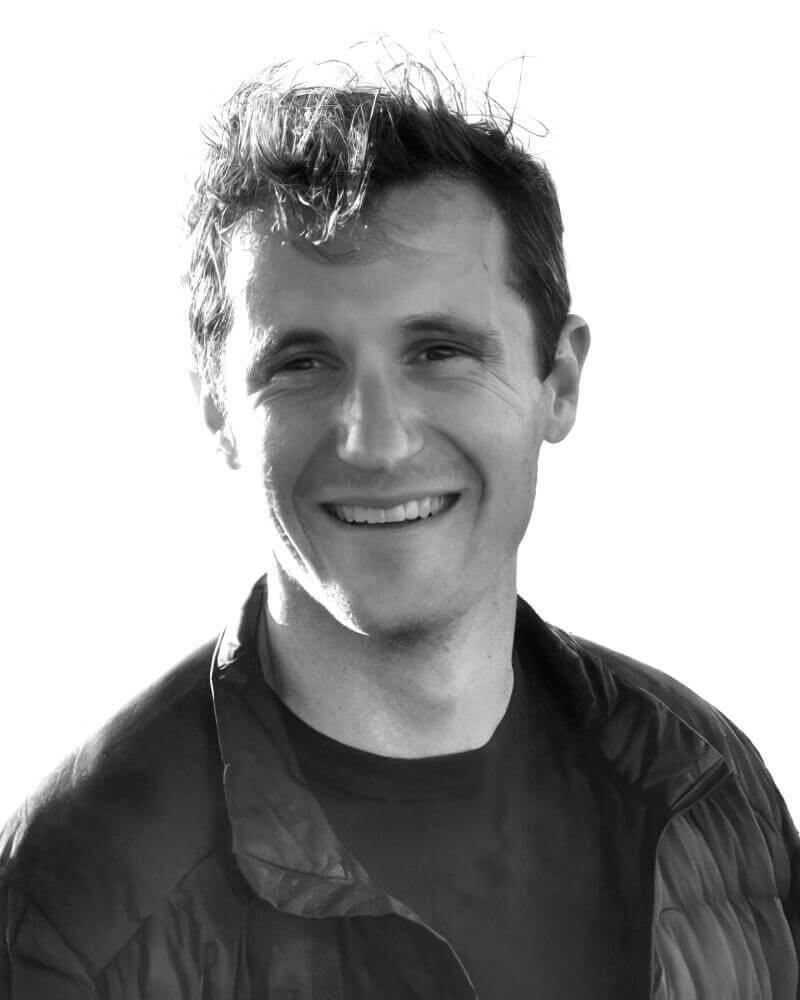
“Service taught me that the hardest problems are the ones nobody has yet decided to treat as solvable. I have spent my life moving toward exactly those problems.”
From Silicon Valley to the Army, Straight Out of High School
Galen Jones grew up in Silicon Valley, one of the most prosperous and technologically connected places on earth. He graduated high school and made a decision that surprised the people around him. He enlisted in the U.S. Army as a combat medic.
Not because there were no other options. Because he wanted to be where the work was most urgent, and the Army offered the fastest path to get there. He arrived as a medic trained to deliver trauma care in environments most people never encounter. He was good at it. He wanted to go further.
That drive carried him through one of the most demanding training pipelines in the military. In 2017, he earned his Green Beret, joining the Special Forces as a medical sergeant and deploying multiple times to the Baltics while stationed in Germany.
He served nine years. He gave all of them fully.
One Month After He Left, Russia Invaded Ukraine
In early 2022, Galen left the Army. Exactly one month later, Russia invaded Ukraine.
He did not hesitate. He volunteered immediately with an international medical NGO and flew to Ukraine, arriving at the outset of the conflict to teach trauma medicine to internally displaced civilians who had no military training, no access to hospitals, and who desperately needed to know how to keep each other alive. He made two trips. He trained medical personnel on the ground and witnessed firsthand the countless factors that make medical response so difficult and so critical during a humanitarian crisis.
Those two trips to Ukraine did not just confirm what he already believed. They gave his entire career a direction he has never looked away from since.
Sudan. Syria. The Work That Keeps Expanding.
Ukraine was not the end of Galen’s humanitarian work. It was the beginning of a broader commitment that has only grown since.
He has spent two summers with the World Health Organization’s Emergency Programme in Cairo, Egypt, supporting the response to the ongoing crisis in Sudan. He has also worked with the Maritime Humanitarian Aid Foundation, helping develop services for people returning from the Al-Hol refugee camp in Syria, one of the most complex and challenging humanitarian environments in the world.
Each posting has deepened his understanding of what it actually takes to deliver healthcare to people in conflict: the systems that fail, the gaps that cost lives, and the interventions that could change outcomes if someone were willing to build them properly.
Galen is willing. That has never been in doubt.
Yale: Building the Tools to Fix What He Has Seen
Named a 2024 Tillman Scholar, Galen is now pursuing dual master’s degrees in Public Health and Business Administration at Yale, focusing specifically on healthcare and protection in conflict settings. His research examines safe implementation methods for telehealth services in conflict zones and techniques for evaluating attacks on healthcare infrastructure, two of the most urgent and underserved areas in global humanitarian medicine.
“I chose the Yale School of Public Health for its exceptional dedication toward affecting real-world impact.”
The Humanitarian Research Lab at YSPH, which focuses on protecting those affected by conflict, is exactly the kind of environment he sought, where academic rigor and on-the-ground urgency are not in tension but in partnership.
He is not studying these problems from a distance. He has lived inside them. That is precisely what makes the work he is building at Yale so valuable.
What Galen’s Story Leaves Us With
Galen Jones’s life is proof that the most meaningful careers are not planned. They are built, one difficult and deliberate choice at a time. From Silicon Valley to the Special Forces to the streets of Kyiv to the WHO offices in Cairo, every chapter has been shaped by the same conviction that the people caught in conflict deserve healthcare that actually reaches them, and that someone needs to build the systems to make that possible.
He has decided that someone is him. And he has spent every year since making himself more prepared to deliver on that decision.