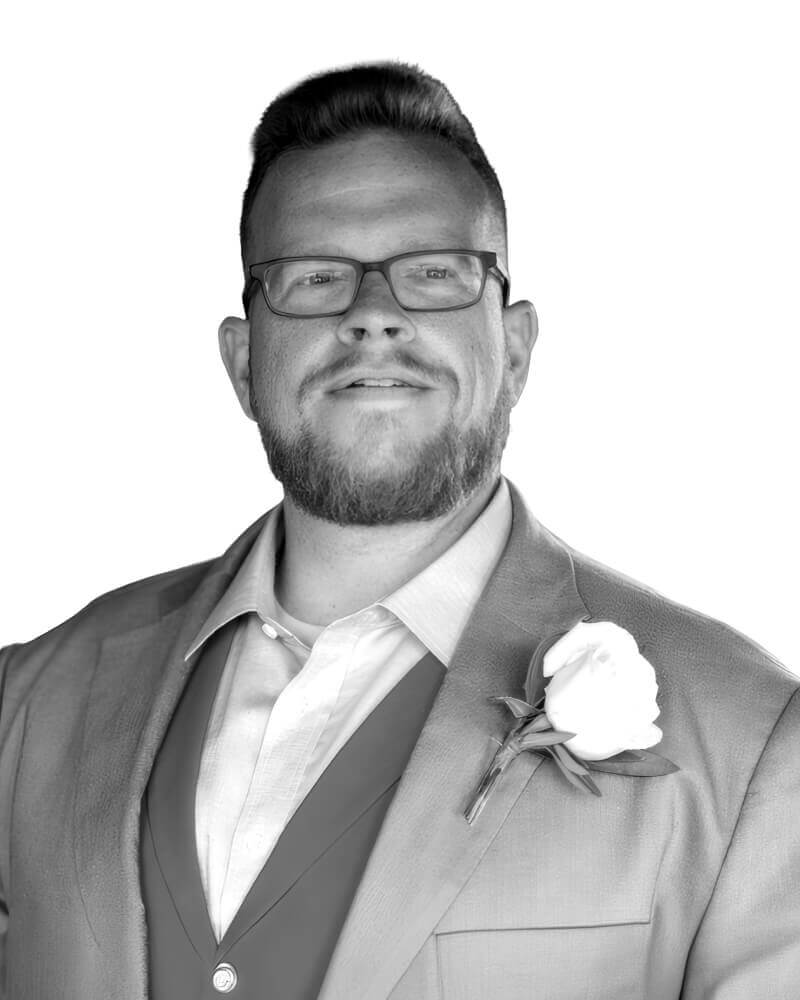
“The bravest thing a veteran can do after coming home is look at what broke the people around them, and dedicate their life to fixing it.”
A Combat Medic Who Could Not Stop Asking Why
David Hibler came to the Army with a quiet, steady intention: to help people. It wasn’t about recognition. It was about being useful where it mattered most.
As a combat medic, that intention became his everyday reality.
He was deployed to Baghdad, where care didn’t arrive in neat, predictable moments. It was constant. Immediate. Often overwhelming. He worked in environments where decisions had to be made quickly, and where the gap between what medicine could offer and what people needed was deeply visible.
Instead of looking away, he paid attention. Those moments stayed with him, not just as memories, but as questions.
Why do some people have access to care while others don’t?
Why does the same condition look so different depending on where someone lives?
And what happens when the problem isn’t just medical, but social, environmental, systemic?
What began as a desire to treat individuals slowly evolved into something more expansive: a need to understand the bigger picture.
The Questions Followed Him Home
After his honorable discharge in 2013, David’s journey didn’t follow a straight line, but it was always moving forward.
At Ohio State University, he built a path that reflected both his curiosity and his discipline. As an undergraduate, he balanced rigorous coursework with the lingering demands of military training and deployment. Over time, that path expanded into something remarkable: multiple degrees across public health, biology, psychology, environmental sciences, and more.
He holds several accreditations and degrees from Ohio State, each one not an endpoint, but a piece of a much larger puzzle.
“I wasn’t trying to collect degrees,” he has shared in interviews. “I was trying to understand something that didn’t seem simple.”
That “something” was complexity.
Today, as a Ph.D. candidate in Evolution, Ecology and Organismal Biology, David studies systems that most people would overlook, like the behavior of invasive mosquitofish. But beneath that research lies a deeper purpose: understanding how interactions within systems, whether biological or social, shape outcomes for individuals.
It’s a way of asking a deceptively simple question:
“Why do some people thrive, while others, often in more difficult circumstances, struggle to do so?”
His work connects disciplines that are rarely studied together, drawing from biology, sociology, psychology, and public health to better understand health disparities and the forces that drive them.
This interdisciplinary mindset, along with his continued commitment to service, led to his recognition as a 2023 Tillman Scholar by the Pat Tillman Foundation.
Reflecting on that moment, David has said:
“It felt like a great honor… but meeting everyone there, seeing the impact they’re making. It became something even more meaningful. Being part of that community is incredible.”
But for him, the recognition wasn’t about looking back.
“This isn’t a reward for what you’ve done,” he recalls being told. “It’s an investment in the impact you’re going to have.”
The Same Person Who Showed Up in Baghdad Still Shows Up Today
Even as his research has grown more complex, one thing has remained constant: his commitment to people.
Since 2017, David has worked closely with veteran communities, helping others navigate the often difficult transition from military to civilian life. Through mentorship programs and advocacy work, he has connected students with resources, built support systems, and created spaces where veterans can feel understood, and at home.
He has helped strengthen mentoring initiatives, worked across departments, and contributed to programs designed to support military-affiliated students not just academically, but personally.
Colleagues often describe this as something that has always been part of who he is.
People often say Dave was simply born to serve, a quality that has stayed with him through his time in the military and everything he has done since.
What David’s Story Leaves Us With
What makes David’s story remarkable is not any single achievement. It is the consistency of the intention behind all of them; a genuine, unwavering desire to be useful to the people who need it most.
That intention took him to Baghdad. It took him to Ohio State. It keeps taking him further. And it has never once changed direction.