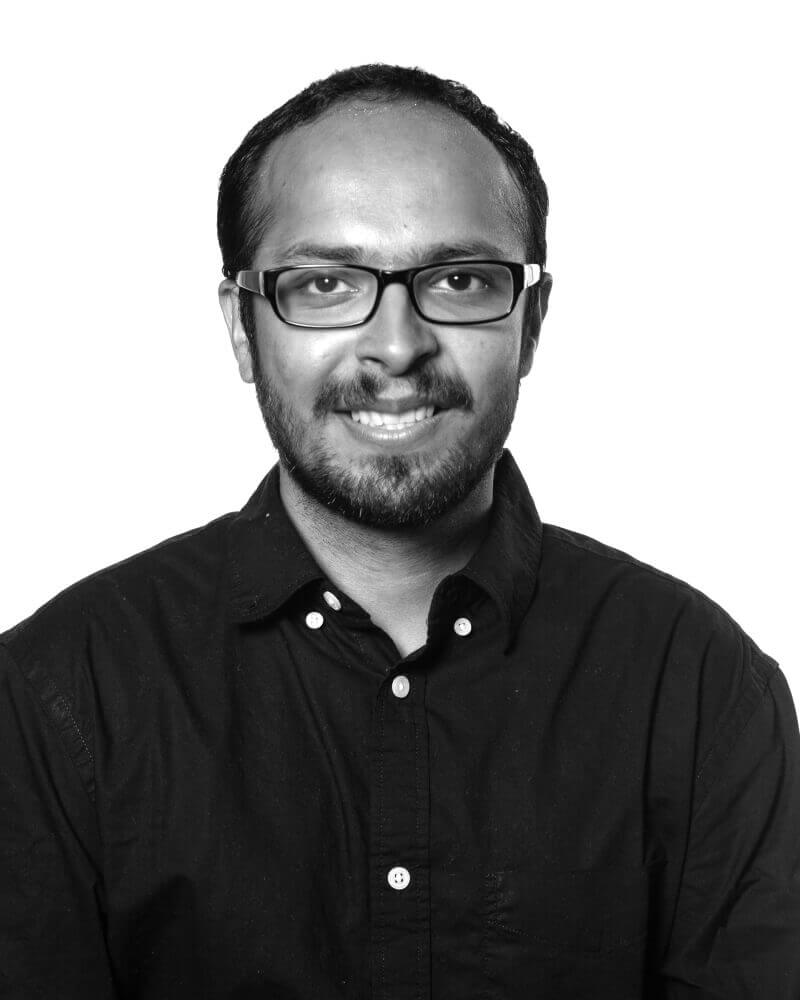
“My mission never really changed. Only the tools did.”
A New Country, A Choice That Changed Everything
In 1999, Vivin Paliath arrived in California with his family, having spent much of his childhood in Oman after leaving India. It was a new country in every sense, unfamiliar, full of possibility, and quietly demanding something of him in return.
He came with a clear plan: study engineering, build a career, create stability. At Arizona State University, he did exactly that, immersing himself in computer engineering, focused and steady, moving toward the life he had imagined.
But somewhere along the way, that plan began to shift. Not dramatically. Not all at once. Just enough for him to start asking a different kind of question, not just what do I want to build? but where am I needed?
A year after enrolling, he found his answer. He enlisted.
Vivin joined the Arizona Army National Guard in 2000
He did it initially to ease the financial burden on his family. It was, on the surface, a practical choice. But what he found there stayed with him far longer than any tuition support ever could.
The Army gave him structure, yes, but more than that, it gave him a way of thinking. A standard. A sense of responsibility that extended beyond himself. In that environment, showing up for others wasn’t encouraged, it was expected.
It was also where something deeper took root. A belief that service wasn’t just something you did in uniform, but something that could shape every decision that followed.
By 2004, he had graduated with his engineering degree and stepped into the world of software.
The path ahead seemed clear again, until it wasn’t. A year later, his unit was called to deploy to Iraq.
Baghdad, and a Problem Worth Solving
In 2005, Vivin deployed to Baghdad in support of Operation Iraqi Freedom, serving a one-year combat tour as a logistics and supplies specialist responsible for keeping his unit operational.
It wasn’t a glamorous role. But Vivin looked at the systems around him and saw ways to make them better.
During his deployment, he used his software engineering skills to build tools that streamlined motor-pool operations, work that earned him the Army Commendation Medal.
In the middle of a warzone, he was writing code to fix a broken process. Not because he was asked to, but because he knew he could.
That instinct, to see what’s broken and quietly improve it, has shaped everything he’s done since.
Then Came the Next Chapter
Vivin completed his military service in 2009 and returned full-time to the career he had built in software engineering. But for a person with his kind of mind, staying still was never really an option.
In 2010, while working full-time, he enrolled in a Master’s in Computer Science program at Arizona State University, and graduated Summa Cum Laude in 2012.
He was working a demanding job. He had already served. And still, he chose to go back to school, not for the credential, but for the knowledge. Because he could see it coming.
The problems were getting bigger.
The Bigger the Problem, the More He Leaned In
Vivin chose to pursue a Ph.D. in Computer Science, not simply to learn more, but to prepare himself for the kind of problems he knew were coming.
As technology became more deeply woven into everyday life, so did its risks. Systems people relied on, often without thinking, were becoming more vulnerable. And for Vivin, that wasn’t just an observation. It was a responsibility.
His research focused on applying artificial intelligence and machine learning to cybersecurity, working at the intersection of theory and real-world application. He wasn’t just studying the problem. He was trying to stay ahead of it.
In 2018, he was named a Tillman Scholar, joining a community of individuals driven by a shared commitment to service beyond self. For Vivin, it wasn’t about recognition. It was about being among people who believed, as he did, that knowledge only matters if you use it to make a difference.
What the Tillman community gave Vivin wasn’t just support, it was belonging.
For someone who built his life across countries, and chose to serve a nation he wasn’t born into, that sense of belonging carried a deeper meaning.
He found himself among people who shared the same instinct: to use what they knew in service of something larger than themselves.
“As a culture of service, a lot of that has helped inspire me and feel less alone about what it is I wanted to do, which is to have a positive effect on the world using my expertise and skills,” he said. “What stands out about the Tillman Scholar community is that every scholar you meet believes that.”
It didn’t change his direction. It affirmed it, making one thing clearer: the work he had begun wasn’t something he would leave behind, but something he would carry forward.
The Work Continues, Just in a Different Form
In 2023, Vivin earned his Ph.D. And, in many ways, started again.
Today, as Co-founder and CTO of Basata, he is applying that same thinking to healthcare, building AI-driven tools that help people navigate complex systems and improve access to care.
The problems look different now. But the intention behind them hasn’t changed.
It has always been about finding what is broken, and doing the work to make it better, quietly, consistently, and in ways that matter to the people who rely on it most.
What Vivin’s Story Leaves Us With
Vivin Paliath arrived in this country with an engineering mind, a work ethic shaped by two cultures, and a genuine desire to contribute. He chose to serve, returned to school while working full time, and spent a year in Baghdad improving systems his unit depended on.
What defines his journey is not one moment but a consistent pattern; of choosing to learn more, give more, and always show up with purpose.