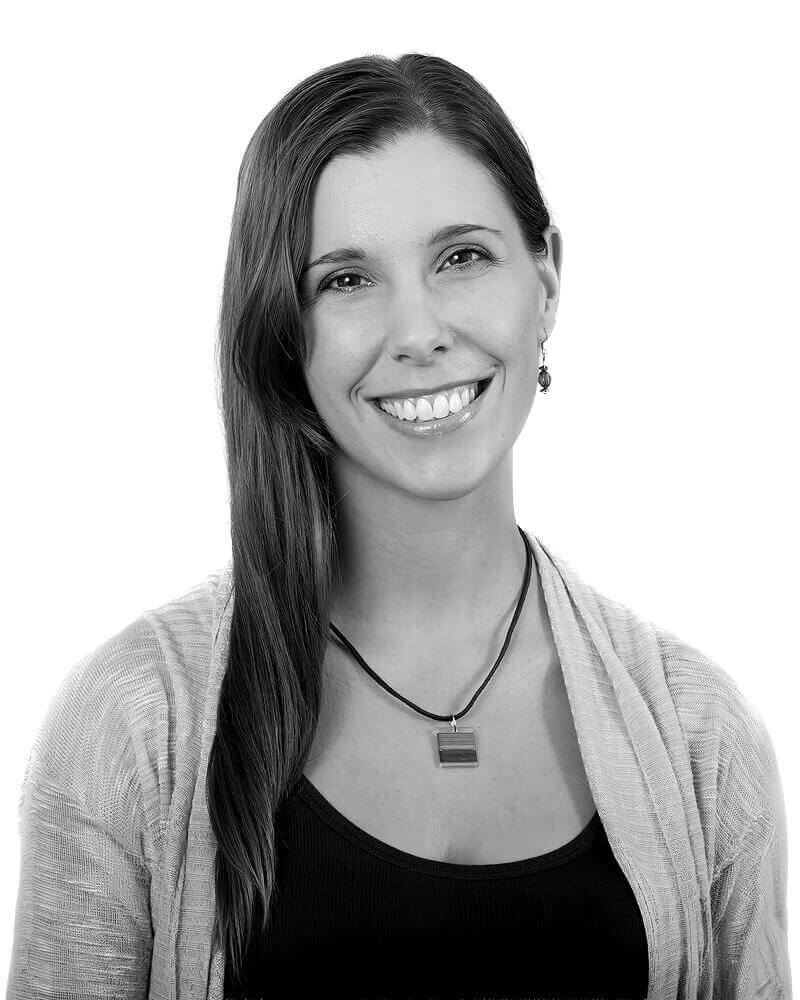
“Understanding between people is not soft work. It is the hardest, most necessary work there is. I gave my life to it. I would do it again.”
A Girl Who Grew Up Between Worlds
Felisa Hervey was never meant to fit neatly into one place. Born in California to missionary parents, she spent her childhood moving between Chile and Kazakhstan before her family returned to the United States when she was fifteen. By then, she had already learned something most people spend a lifetime chasing: that the distance between two people is almost always smaller than it appears.
She arrived at the United States Air Force Academy in June 2001. Just months later, the world changed. And for Felisa, the mission became clearer than ever.
Before she even graduated, she made a decision that says everything about who she is. She traveled to Kabul, Afghanistan, not in a uniform, but as a civilian volunteer, to teach English at an orphanage and learn Dari, the language of the Afghan people. She was twenty years old. She stayed for a year.
She came home speaking a new language, carrying a new understanding, and holding a question that would define the next two decades of her life.
“What if we shared a vision between citizens of Afghanistan and America?”
When Felisa deployed to Afghanistan as an Air Force Captain in 2010, she brought something no one else on the ground had quite like she did: a deep, genuine fluency in the language and culture of the Afghan people.
Her colleagues noticed immediately. Retired Colonel Tim Kirk, who worked alongside her, described her simply as “by far the most important secret weapon that we had going for us.” When she walked into a room and began speaking Dari, locals could not believe she wasn’t from the region. In a culture where respect is everything, that mattered profoundly.
She joined a task force commanded by then-Brigadier General H.R. McMaster, who would later become the 26th National Security Advisor to the President of the United States. Her role was unlike anything found in a standard military job description. She appeared on televised Afghan morning shows in her U.S. Air Force uniform and a headscarf. She met with community leaders. She attended poetry readings. She built bridges where others saw only walls.
McMaster himself wrote that her empathy for the Afghan people and her listening skills “invariably inspired positive action among courageous Afghans.”
Over the course of her deployment, she conducted 350 tactical missions outside secure bases as an intelligence officer and was awarded the Bronze Star Medal for her exemplary service in 2012.
Next, the Mission Changed Form
Felisa left active duty, but she never left Afghanistan, not in her heart, and not in her work.
She enrolled at the University of Arizona to pursue her doctorate in Middle Eastern Literature, supported by the Pat Tillman Foundation as a 2013 Tillman Scholar. Her research focused on the poetry of Afghan women, voices the world had largely never heard. She translated their words. She gave them an audience they had never had.
Her dissertation advisor, Professor Kamran Talattof, described her as someone who “prepared for classes, listened passionately, and contributed generously”, a student so present, so engaged, that the details stayed with him long after. Her dissertation, he said, was “in service of Afghan women writers”, and it was unique and wonderful that she helped bring their voices to the forefront.
In 2015, she published a landmark bilingual collection that became a finalist for the Best Translated Book Award. She also co-founded Civil Vision International, a nonprofit dedicated to connecting Afghan and American citizens through dialogue, education, and art.
She was doing the work she had always believed in. And then, on an August night in 2015, everything stopped.
August 29, 2015…
Felisa was on a base in Kabul, deep in the work she loved, arranging a cultural exchange between senior U.S. and NATO leaders and influential Afghan citizens. She collapsed. At thirty-one years old, in excellent health, she had suffered a massive stroke.
The stroke left her with aphasia, a condition that affects the ability to speak, read, and write, but not the ability to think or feel or understand. Her intellect remained entirely intact. But the words, six languages’ worth of them, a lifetime of them, were suddenly, painfully out of reach.
“Before a massive stroke silenced her in 2015, the poet and translator Farzana Marie spoke six languages. After a decade of arduous rehabilitation, she now speaks a seventh: the tongue of remarkable courage.” said Paulann Petersen, Oregon Poet Laureate Emerita.
She did not stop. She could not.
Wrestling Words Back Into the World
In August 2018, Felisa successfully defended her doctoral dissertation, three years after her stroke. Word by painstaking word, she had rebuilt enough language to complete what she had started. She graduated with her Ph.D. in Middle Eastern Literature from the University of Arizona in May 2019.
And she kept writing.
In 2025, under her pen name Farzana Marie, she published her debut poetry collection, a profound, deeply personal account of life after stroke, after aphasia, after silence. Former Congresswoman Gabby Giffords, who has lived with aphasia herself since 2011, wrote the foreword.
The words that greet readers of the collection say it better than anything else could:
“Word by word, poem by poem, this powerful volume charts her way forward, as she crafts a lyrical path of courage, transformation, hope, and resilience.” ~ Juhi Bansal, Award-winning Composer and Conductor
Why Felisa’s Story Moves Us
Felisa’s story has asked everything of her, again and again, and found her rising every single time. She flew hundreds of missions, built a life’s work around understanding between people, and when a stroke took her words, she fought back and turned the silence into poetry.
That is what heroism looks like when it is quiet. And we are proud to make sure the world knows her name.